
Artificial Intelligence (AI) is rapidly transforming the global workplace landscape. Leaders from Dubai's education and industrial sectors have called for a greater focus on AI-ready and skills-based education to prepare future generations for these changes.
A recent high-level meeting in Dubai highlighted the need to further strengthen educational cooperation between India and the UAE. Experts participating in the discussion believe that practical skills, innovative thinking, and technical knowledge, rather than very academic degrees, will form the foundation of future employment.
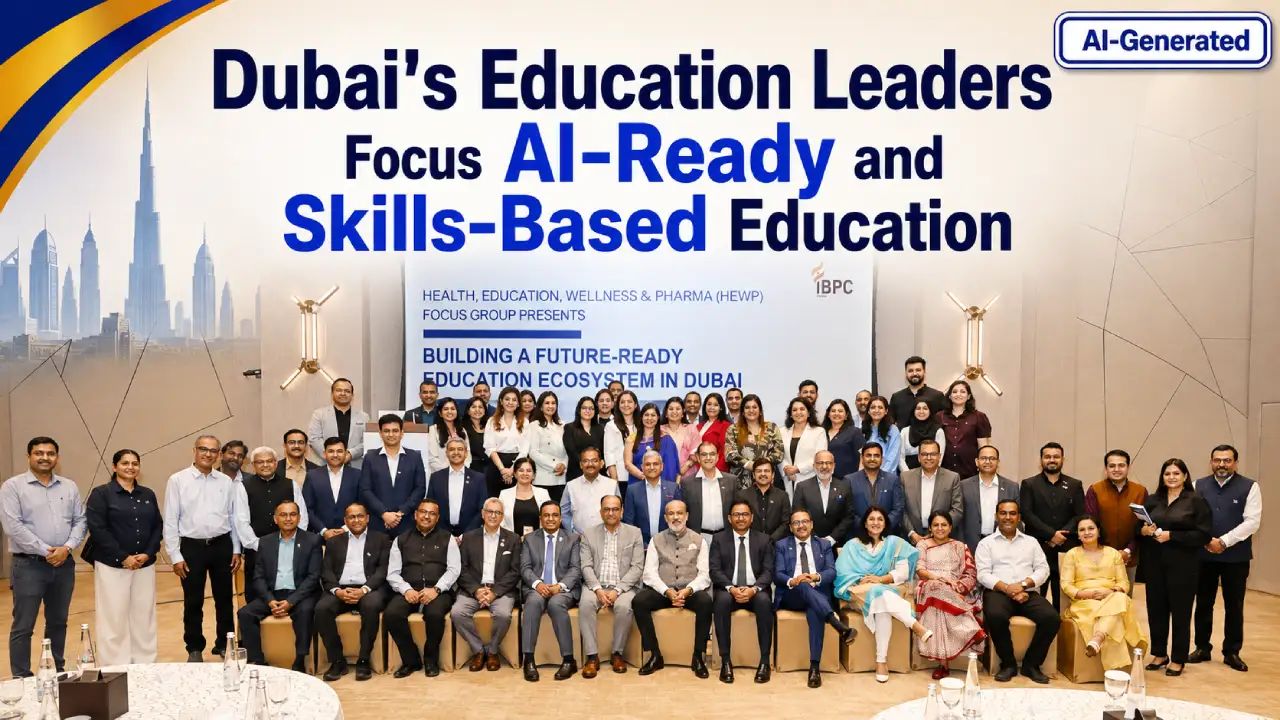
The Indian Business and Professional Council (IBPC) Dubai, the Consulate of India, and Dubai International Academic City jointly organised a special business discussion titled "Building a Future-Ready Education Ecosystem in Dubai."
Education experts, policymakers, and industry representatives participated in the meeting. Key topics of discussion included AI-driven education, skill-based education systems, employment-oriented courses, industry-academia partnerships, and the importance of lifelong learning.
Speaking at the event, Indian Deputy Ambassador Yatin Patel highlighted the growing educational cooperation between India and the UAE.
He stated that the partnership between the two nations regarding education and skill development could expand further in the future. In particular, he mentioned the establishment of the Indian Institute of Management Ahmedabad's Dubai campus as a significant milestone in bilateral educational cooperation.
According to Chindu Mohsin, a representative of Dubai International Academic City, human skills will be just as important as technical knowledge in the future job market.
She highlighted several key skills: creativity, adaptability, critical thinking, collaboration, and problem-solving. These skills are expected to remain highly valuable for humans even in the age of AI.
Participants in the discussion noted that, in the current era, education cannot be confined only to schools or universities.
There is a growing need to acquire new skills at various stages of one's career. So, the importance of initiatives such as vocational training, professional development courses, and skill upgradation programs is steadily increasing.
Special emphasis has been placed on an industry-led curriculum to bridge the gap between industry demands and the education system. This involves cute curricula based on corporate requirements, providing practical training, increasing internship opportunities, and involving industry experts. Such initiatives can better prepare students for employment.
According to experts, theoretical education alone is no longer sufficient. Students need internships, direct industry experience, project-based learning, and opportunities to solve real-world problems. Such experiences can provide a significant advantage in the future job market.
The role of educational technology, or EdTech, also features prominently in the discussion. Experts believe that online education, AI-driven teaching systems, digital learning platforms, and personalised learning will play a crucial role in making the future education system more effective.
The participants agreed that closer cooperation is needed among educational institutions, the government, and business organisations. In their view, this partnership will develop a skilled workforce, promote innovation, attract international students, and further strengthen Dubai as a global hub for knowledge and technology.


Comments ( 0)
Leave a Comment
No comments yet. Be the first to comment!