
The Food and Drug Administration (FDA) of Maharashtra has taken a major decision to foster healthy eating habits among school students in the state.
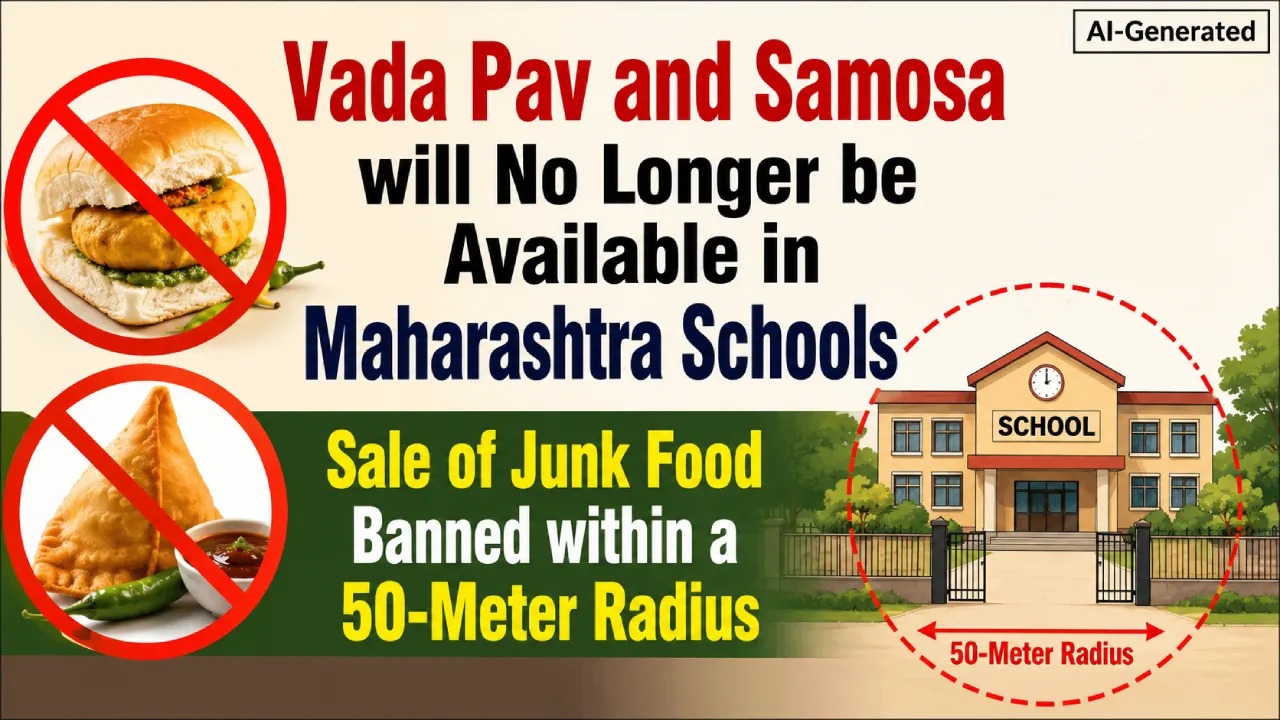
According to the new guidelines, the sale, free distribution, or advertisement of foods high in fat, sugar, and salt (HFSS) such as vada pav, samosas, chips, soft drinks, ice cream, and chocolate is prohibited within school premises or within a 50-meter radius of schools.
This rule applies to all types of schools, including government, private, and residential institutions, as well as those affiliated with CBSE, ICSE, and state boards.
According to the new guidelines, foods high in fat, trans-fat, sugar, and salt (HFSS) cannot be sold, distributed, or promoted within school premises or within a 50-meter radius of the school. This decision will cover approximately 1.08 lakh schools and around 2 crore students in the state.
According to the guidelines, the following food and beverage items cannot be sold within the school premises or within a 50-meter radius: vada pav, samosas, deep-fried snacks, soft drinks, chocolates, potato chips, beverages with high sugar content, and ice cream.
Health experts have long maintained that these items are unsuitable for children's regular diets due to their high fat, sugar, or salt content.
Maharashtra FDA Commissioner Tukaram Mundhe stated that this plan is part of the state's "Safe Food, Safe Maharashtra" campaign. According to him, the government's goal is to ensure that safe and nutritious food reaches every child. This will foster healthy eating habits among children and help build a healthy society in the future.
Under the new guidelines, new rules have also been introduced for school canteens, hostel canteens, PM-POSHAN (mid-day meal) kitchens, Anganwadi centres, and agencies supplying food to schools. After this, possessing a valid FSSAI license and registration will be mandatory for them.
According to the new guidelines, every school must install a food safety display board. A food safety supervisor must be appointed. The "Eat Right School" program must be applied. Awareness activities regarding health and nutrition must be conducted, and safe drinking water, clean kitchens, proper food storage, and hygiene must be ensured.
The FDA further stated that the primary responsibility for implementing this rule will rest with school headmasters and managing committees. The School Education Department will oversee government and government-aided schools, while the CBSE, ICSE, other education boards, and local administrations will monitor compliance in schools under their respective jurisdictions.
These guidelines have been issued as part of the implementation of the Food Safety and Standards Authority of India (FSSAI)'s "Safe Food and Balanced Diets for Children in School Regulations, 2020."
The state government believes that this will reduce the risk of obesity, diabetes, and other lifestyle-related diseases among children, and foster healthy eating habits.


Comments ( 0)
Leave a Comment
No comments yet. Be the first to comment!